
The kitchen is quiet, but the pressure cooker is whistling. To anyone standing in the next room, dinner seems to be progressing perfectly. But inside the pot, the physics are shifting. The liquid is past the boiling point, held back only by a mechanical seal. If you don't know how to vent the steam, the moment you touch the lid isn't a transition — it’s an explosion.
In the global trade landscape of 2026, the American consumer is standing in that quiet next room. Over the past few months they have seen relatively stable prices on the shelf. They see a stock market that hasn't quite buckled (pre-war with Iran). But inside the corporate "pot," the pressure is becoming unsustainable.
We haven’t seen the impact of tariffs yet because we are currently living in a period of artificially sustained supply. The market doesn't reflect the reality of the tariffs yet, but the physics of your P&L are already changing.
The Logic vs. The Lag
Logically, prices should have spiked months ago. Between the administration's initial "Liberation Day" universal tariffs and the subsequent fallback duties, the "tax" on doing business internationally has climbed significantly. So why is a toaster still $29.99?
The answer lies in the Inventory Buffer. Fearing the volatility of the 2024–2025 election cycle and the subsequent trade wars, savvy companies didn't just buy what they needed, they gorged. According to reports from the Logistics Managers’ Index (LMI), firms engaged in massive "preemptive inventory builds" throughout late 2025, leading to record-high warehousing utilization as they sought to hedge against shifting trade policies.
Right now, most companies are selling "old" money. They are moving products that have already landed, cleared, and been paid for before the legal hammers dropped. This creates a dangerous illusion of stability. The market looks calm because we are consuming the past. But once that pre-tariff inventory is depleted, companies will hit the Price Wall. You cannot sell old money forever, and the "new" money is significantly more expensive.
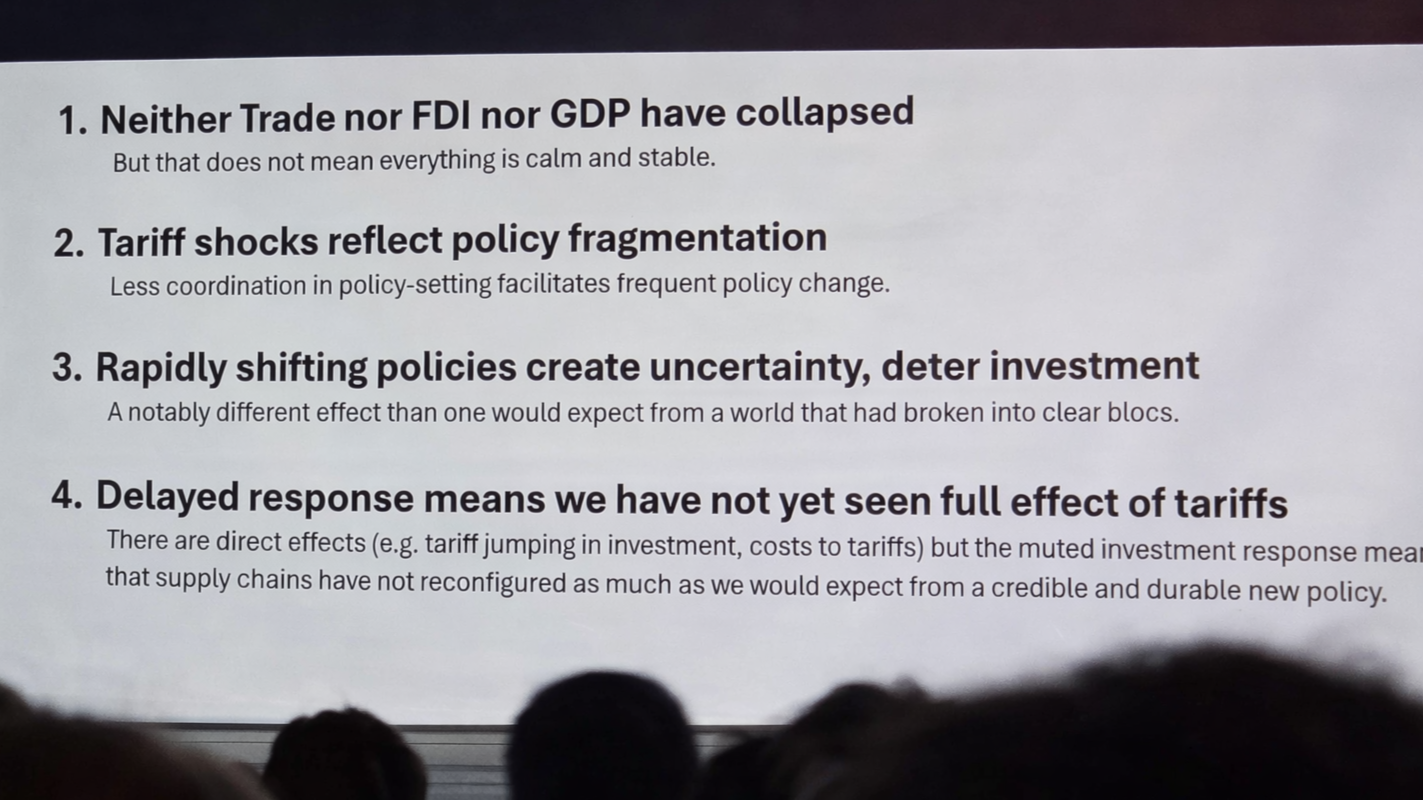
Slide from a recent presentation by World Bank Economist, Phil Levy
The SCOTUS Whiplash: Strategy in the "Gray Zone"
The logic was further clouded by the February 20, 2026 Supreme Court ruling in Learning Resources Inc. v. Trump. When SCOTUS struck down the use of the International Emergency Economic Powers Act (IEEPA) for broad tariffs, many CFOs breathed a sigh of relief, expecting a windfall of billions in refunds.
But the "Gray Zone" of trade is rarely that simple. As analyzed in briefings by the Center for Strategic and International Studies (CSIS), the administration’s immediate pivot to Section 122 (a 1974 authority allowing for a "temporary import surcharge" to address balance-of-payments deficits) means the pressure hasn't been released; the seal has just been tightened.
If your strategy was built on the "Logic of the Law," you are likely in distress. If your strategy was built on Dynamic Preparedness, you recognized that the legal authority matters less than the geopolitical intent. The intent is to tax the corridor; the specific law used is just the tool.
A Turkish Perspective On Corporate Resolve
I recently spoke with the Turkish Consul General of Chicago about this exact phenomenon: how companies survive when the "logic" of the market is constantly being rewritten by the "logic" of the state.
In Turkey, a 15% currency fluctuation or a sudden shift in EU trade regulations isn't a "generational" event; it’s just Tuesday. He described a "Steely Reserve" among their business leaders. They don't wait for the market to reflect the crisis before they act. They have built "Economic Callouses" that allow them to pivot their sourcing, pricing, and logistics in real-time.
The lesson for US leaders is that we’ve become soft on Consistency. We want the road to match the map we printed last November. Turkish leaders, conversely, operate with dynamic and adaptable strategies. They don't care if the "logic" says the road should be open; if the reality on the ground shows a roadblock, they take the detour immediately. They prioritize Responsiveness over Certainty.
Read also: How to Make Sure Your 2026 Strategy Isn’t Outdated by June
How to Vent the Pressure
To manage this internal conflict without the "pot" exploding, you need to transition to a Growth Intelligence System™.
Audit Your "True Cost": Transition your analysis away from current COGS (Cost of Goods Sold) based on sitting inventory. Instead, calculate your Replacement COGS. What will it cost to put that item back on the shelf tomorrow? This provides the foresight needed to see the internal pressure building months before it hits your public-facing P&L.
Integrated Planning for Volatility: Ensure your Marketing and Sales teams are factoring potential price fluctuations into their mid- and long-term initiatives. In a volatile trade environment, "low margin" strategies are a liability. If you don't build a buffer into your projections now, a sudden cost shift will eliminate your profitability before you can react.
Institutionalize Alternative Sourcing: Build the "Steely Reserve" into your operational structure. If a sourcing corridor is under threat, do not wait for the finality of a court ruling or a policy shift to explore other paths. Give yourself the options to survive any outcome.
Conclusion: The End of the Mirage
The quiet in the kitchen won't last. The inventory buffers are thinning, and the legal "Gray Zone" is narrowing. The real test of your leadership isn't how well you followed the old map, it’s how quickly you can navigate the new reality when the pressure finally vents.
The goal hasn't changed, but the environment has. Don't wait for the explosion to start building your dynamic strategy.
Build the flexibility. Navigate the change. Win the market.
